


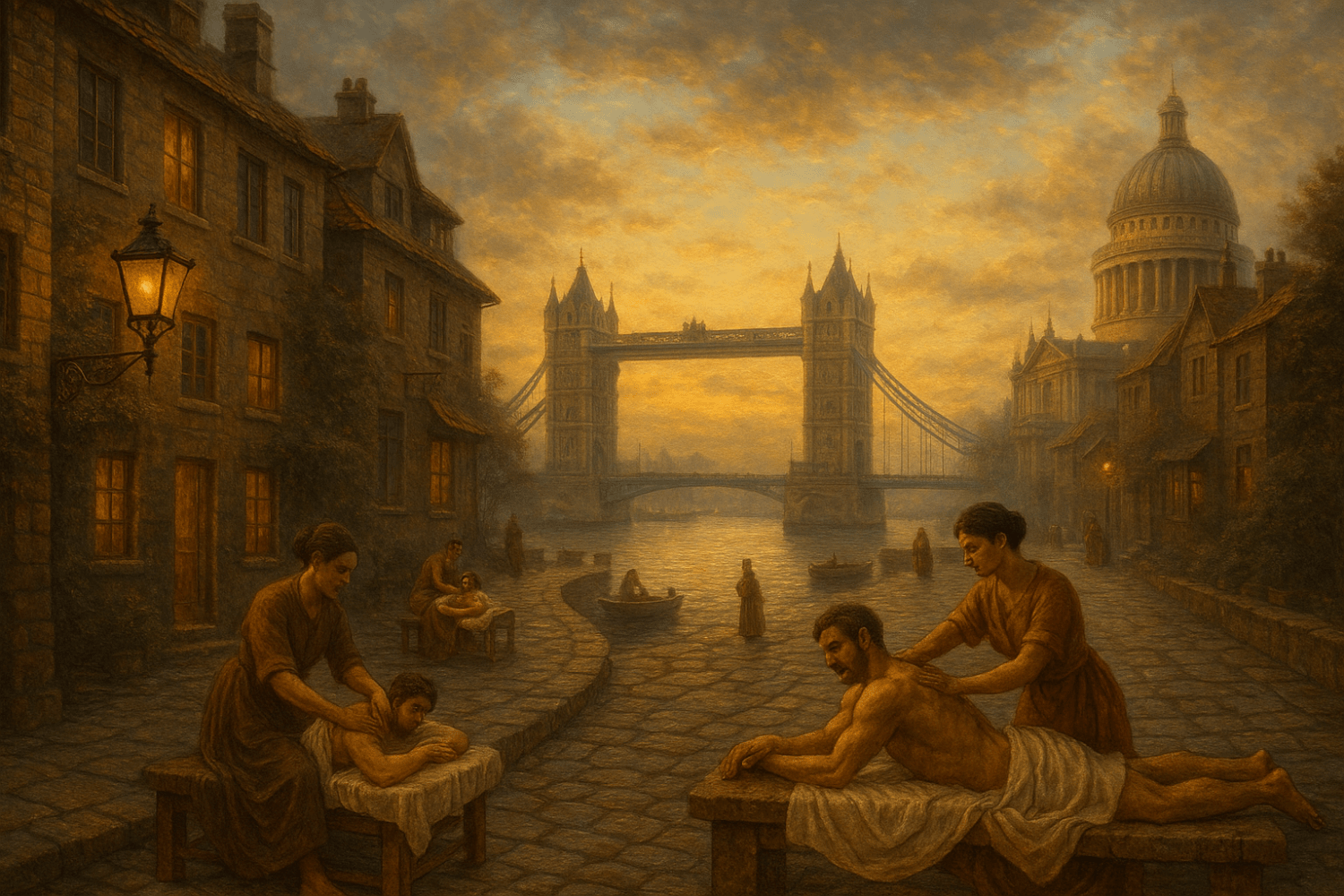
Long before scented candles and spa playlists, massage was a practical tool for survival. Soldiers, athletes, and rulers understood that tense muscles led to slow reactions, and slow reactions could cost battles. While the modern world treats massage as a luxury, the ancient world treated it as strategy. The story is part fact, part legend, and entirely human: people under pressure sought calm hands to keep them sharp.
In ancient Egypt, reliefs show attendants kneading arms and feet as calmly as scribes drew up treaties. The logic was simple. A chariot archer needed a steady grip and relaxed shoulders to loose arrows with precision. After long days in the desert, the quickest route back to accuracy was skilled touch and aromatic oils. Frankincense and myrrh added a hint of ritual to what was really a clever form of maintenance for bodies pushed to their limits.
Across the Mediterranean, Greek city states tied massage to athletics and warfare. Wrestlers were oiled and massaged as part of training, and hoplites benefited from the same techniques. The Greeks believed balance between mind and body produced better citizens and better fighters. A good rub down before drill could loosen calves for marching and clear the fog of yesterday’s wine. Philosophers might debate virtue, but soldiers swore by olive oil, warmed hands, and brisk friction to wake muscles before dawn.
Rome adopted the habit and scaled it up, as Rome did with nearly everything. Baths were not only for gossip and politics, but also for pre-battle preparation. After soaking, legionaries received vigorous massage to flush lactic acid and keep armour from feeling like a prison. Imagine a line of soldiers stepping from the caldarium to a bench where a practised pair of hands found knots along the shoulders. The empire moved on roads built by engineers and held together by men whose backs were coaxed into cooperating.
Farther east, Chinese physicians developed tui na, a system that combined manual therapy with an understanding of the body’s channels of energy. A general could not command effectively if his neck was locked like a stubborn gate. Techniques to disperse stiffness and settle the mind were considered part of proper governance. Manuals spoke of harmonising the body so decisions were not made under the tyranny of tension. Calm muscles meant clearer strategy, which any commander valued more than a second cup of tea.
In India, traditions within Ayurveda treated the warrior class with abhyanga, a warm oil massage that soothed joints battered by training with sword and bow. The idea that nourishment could travel through skin felt intuitive in a world where diet, breath, and movement were considered one conversation. Before a campaign, a prince might submit to a thorough application of oil, a reminder that strength and softness are partners. Armour kept you alive on the field; massage helped you arrive there ready to move.
Japan carried its own lineage in anma, later influencing shiatsu. Samurai culture prized composure, and composure is difficult when the trapezius feels like a clenched fist. Behind the formal layers of etiquette sat very practical routines for keeping hands agile and vision settled. The elegant stillness seen in scroll paintings did not come from sheer will. It came from training, breath, and yes, meticulous work along the shoulders and forearms until the sword felt like an extension of thought rather than a weight to be tolerated.
Of course, history has room for stories that are almost too good to check. One tale claims a tiny border skirmish was decided because a field healer found a cavalry officer’s hip trigger point in time for the afternoon charge. Another says a queen negotiated peace after a shoulder massage dissolved a week of stubbornness faster than any envoy. Whether or not these anecdotes are accurate, they underline a truth every era recognises. Clear minds grow in relaxed bodies.
Strip away the myths and a pattern remains. Under stress, humans reach for hands that know where tension hides. Ancient warriors understood that resilience is not only built by grit. It is built by recovery. Massage offered focus before action and repair after effort. The techniques varied, the oils changed, and the languages differed, but the aim stayed constant. Make the body responsive, and the person becomes more capable of meeting the moment.
Today the battlefield has been replaced by meetings, deadlines, and training sessions, yet the principle holds. Whether you are preparing for a marathon or a Monday, massage is not indulgence. It is tactical kindness. It turns clumsy effort into efficient movement and turns restless thinking into steady attention. The ancestors would recognise the intent even if they did not recognise the moisturiser. Before you set out to conquer your empire, however small or grand, consider the oldest preparation of all. Breathe, lie down, and let skilled hands shape you back into ease.
From chariot archers to office chairs, the mission has never changed. Keep the body supple so the mind can be brave.