


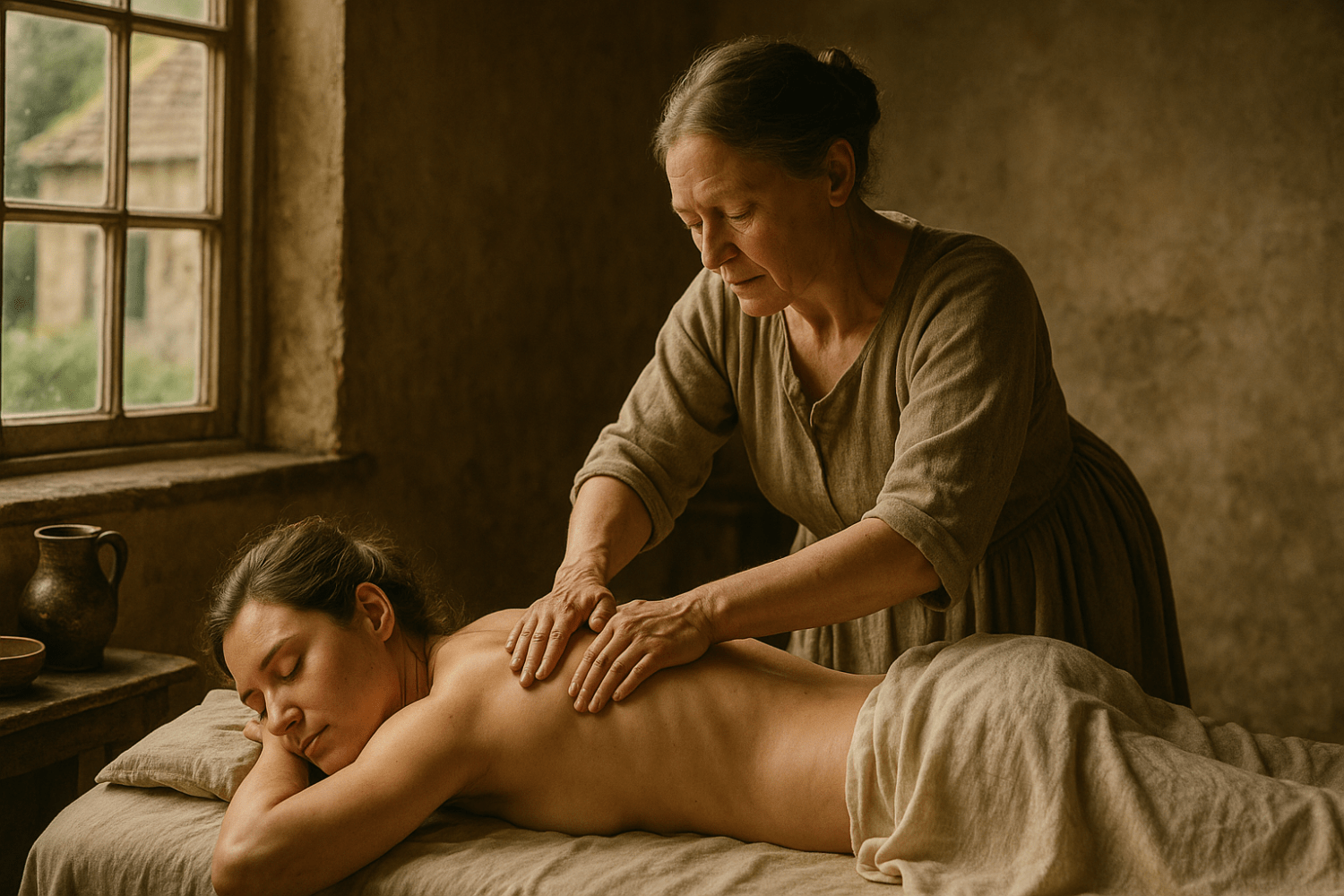
Massage is one of humanity’s oldest healing arts, predating written records and formal medical systems. from its earliest days, people have recognised that skilled touch can soothe pain, relax the mind and restore the body’s natural balance. what began as instinctive rubbing for relief evolved into a rich, global tradition shaped by culture, philosophy and science.
Prehistoric and early ritual origins
Before civilisations rose, humans used touch to ease discomfort. rubbing sore muscles after hunting or kneading a tired limb after long travel was instinctive. in many early societies, these simple acts took on ritual significance, becoming part of healing ceremonies performed by shamans or community elders. touch was not only physical; it was believed to channel spiritual energy and connect the body to the wider forces of nature.
Ancient China and the art of harmony
In China, massage developed within the framework of traditional medicine, which emphasised the flow of Qi, or life energy, through meridians in the body. texts from as early as 2700 BCE describe Tui Na, a therapeutic form of massage that combined pressing, kneading and stretching. these methods were not just for relaxation but to correct imbalances, stimulate circulation and maintain health. massage was often combined with acupuncture, herbal medicine and Qigong exercises to create a holistic approach to wellbeing.
Indian Ayurveda and the tradition of daily care
In India, massage has been part of Ayurveda, the ancient system of life science, for thousands of years. Abhyanga, the practice of full-body oil massage, was (and still is) a daily ritual for many, believed to nourish the skin, strengthen muscles, improve circulation and calm the mind. herbal oils were tailored to the individual’s Dosha, or constitution, making massage a personalised therapy. infants received gentle massage from birth, setting a foundation for lifelong health and vitality.
Egypt and the art of specialised techniques
In Egypt, murals dating back to around 2500 BCE depict foot and hand massage, suggesting an early understanding of reflex points. these methods likely influenced what would much later become reflexology. Egypt’s role as a hub of trade meant that its massage practices travelled along with merchants and sailors, spreading to neighbouring cultures around the Mediterranean and beyond.
Greece, Rome and the athletic connection
The ancient Greeks wove massage into their culture of athletics and philosophy. physicians like Hippocrates wrote about the value of anatripsis, or rubbing, to strengthen muscles, aid recovery and prevent injury. athletes were massaged before and after competition, often with aromatic oils. Rome expanded this into a social ritual through its bathhouses, where heat, water and skilled manual therapy combined to refresh the body and mind. Roman soldiers also benefited from massage to keep them in fighting condition during long campaigns.
Japan, Korea and regional adaptations
As Chinese ideas spread east, Japan developed Anma, a style of massage that emphasised rhythmic kneading, tapping and stretching. by the seventeenth century, Anma was widely practised and eventually evolved into modern Shiatsu, which focuses on applying pressure to specific points to restore energy flow. Korea developed its own traditional massage forms, integrating acupressure and stretching techniques often performed in bathhouses.
Middle Eastern traditions and the hammam culture
In the Middle East, massage flourished alongside the tradition of the hammam, or steam bath. here, attendants performed vigorous scrubbing, stretching and kneading to cleanse and invigorate the body. these practices blended influences from Greek, Roman and Persian cultures, becoming a cornerstone of social and therapeutic life across the region.
Continuity through the Middle Ages
In medieval Europe, formal medical systems shifted focus, but massage persisted in daily life. midwives, healers and barbers used it to aid childbirth, soothe injuries and ease muscle pain. in the Islamic world, scholars preserved and expanded upon Greek and Roman medical knowledge, including massage techniques, ensuring that this tradition survived until Europe’s Renaissance revival.
Renaissance and early scientific observation
During the Renaissance, artists and scientists took a renewed interest in anatomy. detailed studies of the human body encouraged more precise and deliberate massage methods. practitioners began to link specific manipulations to targeted effects, laying the groundwork for a more systematic approach to therapy.
The Swedish system and modern formalisation
The nineteenth century marked a turning point with the development of the Swedish massage system by Per Henrik Ling. drawing on his knowledge of gymnastics, anatomy and physiology, Ling codified a series of strokes—effleurage, petrissage, friction, tapotement and vibration—that are still taught today. his approach was adopted in medical and sports settings, helping to establish massage as a recognised therapeutic practice.
Massage in the twentieth century
The twentieth century saw massage expand globally, supported by both scientific research and cultural exchange. western therapists incorporated ideas from eastern traditions such as Shiatsu, Thai massage and reflexology. massage became part of physiotherapy, rehabilitation and stress management, and was increasingly used in hospitals, sports teams and wellness centres. professional associations emerged to set training standards and promote the benefits of the craft.
The timeless appeal of touch
Massage has endured because it meets universal human needs with simplicity and adaptability. sore muscles, tense minds and the desire for connection are constants across time and culture. from the healing hands of ancient temple attendants to the skilled therapists of modern clinics, the essence remains unchanged: through touch, the body can be comforted, supported and restored.
Today, massage stands as a bridge between ancient wisdom and contemporary science. its journey spans continents and centuries, yet the foundation is as old as humanity itself. wherever people seek relief, renewal or simple human connection, the practice of massage continues to offer its quiet, enduring gift.