


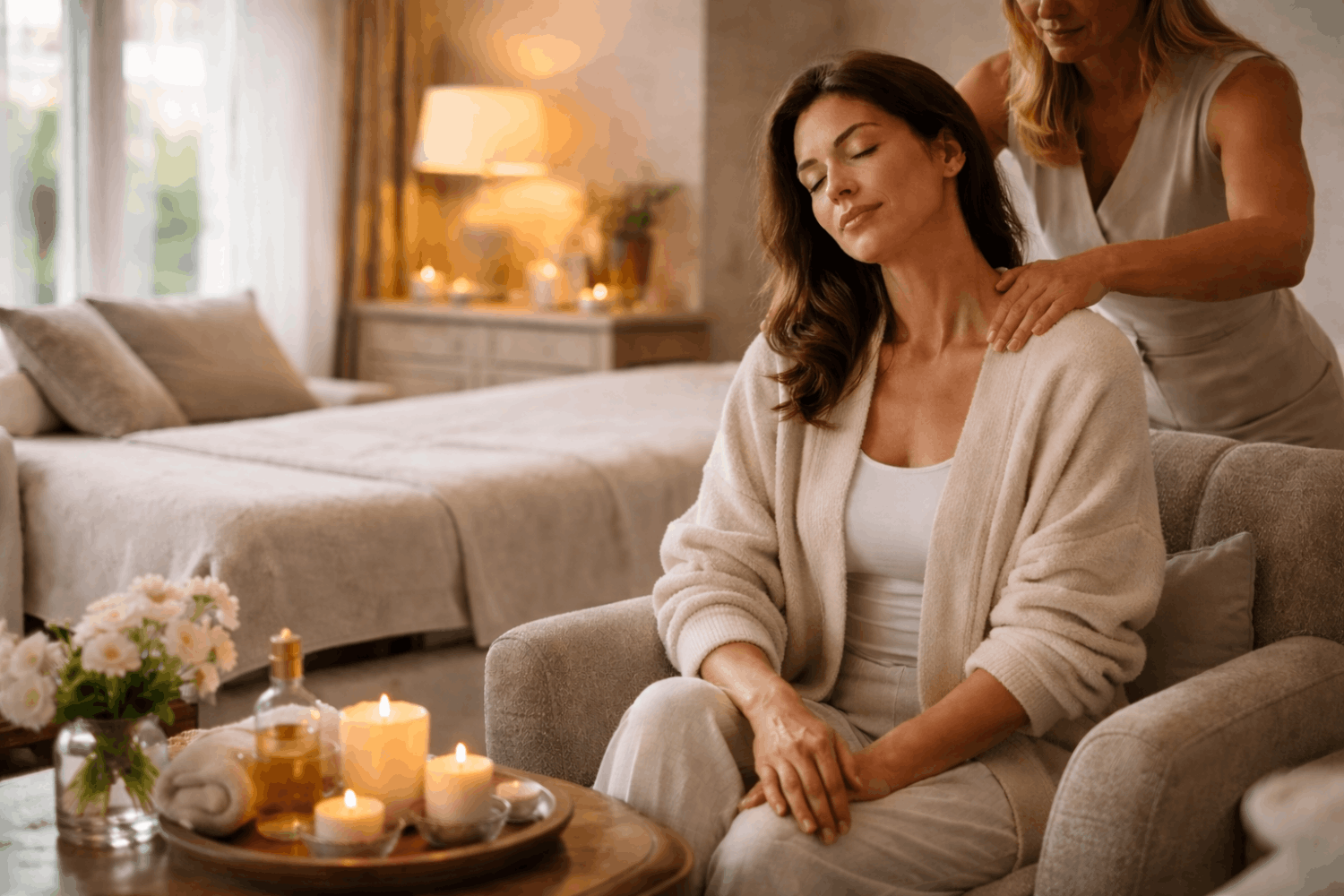
Most of us know what stress feels like: the tight shoulders after a long day, the racing thoughts at bedtime, the
creeping sense that you are always “on” and never fully off. In the UK, busy schedules, commuting, caring
responsibilities, and constant notifications can add up to a lifestyle that looks productive on the surface but feels
draining underneath. Balance, in reality, is not a perfect routine. It is the ability to recover well and return to
yourself, even when life is full.
In-home massage supports that kind of balance in a practical way. It reduces friction, saves time, and creates a
calmer experience from the moment the session begins. Instead of rushing to a clinic, navigating traffic, or
squeezing an appointment into a packed diary, you can build rest directly into your day. The result is not only
physical relief, but a smoother transition from stress to stillness.
Why the home setting changes the experience
When you receive a massage at home, your nervous system has fewer hurdles to clear. You are in a familiar space,
surrounded by your own cues of safety, comfort, and privacy. That matters, because stress is not only a mental
state; it is a physiological response. If you are rushing, uncomfortable, or overstimulated, your body may stay in a
guarded mode, even if you want to relax.
At home, you can step into a more restful rhythm. There is no need to think about travel time, parking, or what you
must do immediately afterwards. That single shift can make relaxation easier to access, especially for people who
find it difficult to switch off. Many clients notice that the benefits last longer when they can remain in a calm
environment after the session, rather than returning straight to noise and demand.
Simple takeaway:
Relaxation is not just about the massage itself. It is also about what happens before and after, and home removes
many of the common stress triggers.
Relaxation is not just about the massage itself. It is also about what happens before and after, and home removes
many of the common stress triggers.
How massage supports a balanced lifestyle
Balance often comes down to three pillars: how your body feels, how well you sleep, and how you manage everyday
pressure. In-home massage can help across all three, especially when it becomes part of your routine rather than an
occasional treat.
1) Easing muscular tension from modern life
Working at a laptop, driving, training, and even scrolling on a phone can create repetitive strain. Over time, that
tension can become your normal, which is why you might not notice how tight you are until you finally relax. A
skilled massage can help soften overworked areas, improve mobility, and reduce that heavy, compressed feeling many
people carry in the neck, shoulders, jaw, and lower back.
In-home sessions are particularly helpful if you struggle with stiffness after work, or if you often delay self-care
because it feels like another job to fit it in. When the massage comes to you, the barrier to consistency is much
lower, and consistency is where many people feel the most meaningful change.
2) Supporting better sleep without forcing it
Sleep does not respond well to pressure. Telling yourself you must fall asleep often creates more tension, not less.
Massage offers a more indirect approach: it encourages physical comfort and a calmer nervous system, which can make
sleep feel more natural. When your shoulders are not clenched and your breathing is slower, bedtime can become less
of a battle.
An at-home session can be timed to support your evening routine. Many people find that a massage in the late
afternoon or early evening helps them unwind without turning the rest of the day into a rush. You can finish the
session, hydrate, take a warm shower, and move straight towards rest.
3) Creating a mental reset you can return to
Stress has a way of narrowing your attention. You focus on what is urgent, and the rest of life can feel like
background noise. Massage can act as a deliberate pause: a protected window where your only job is to breathe,
soften, and receive support. That pause is valuable, not because it solves every problem, but because it changes
your baseline.
When your baseline is calmer, your decisions often improve. You may notice you snap less, you recover from setbacks
faster, and you feel more present with people you care about. That is what balance looks like in real life: not a
flawless schedule, but a steadier response to whatever the day brings.
How to get the most from an in-home session
You do not need to turn your home into a spa, but a few small choices can make the experience feel more settled and
luxurious. Try the following:
- Choose a quiet room where you are unlikely to be interrupted, and silence non-essential notifications.
- Set the temperature slightly warmer than usual, as your body may cool down when you relax.
- Dim the lights if possible, or use a warm lamp rather than bright overhead lighting.
- Keep water nearby and plan a few minutes afterwards to stay calm rather than jumping straight into tasks.
- Share your preferences clearly, including pressure, areas to focus on, and any discomfort or sensitivities.
It also helps to think about your session as part of a wider lifestyle, not an isolated event. If you regularly sit
at a desk, a therapist can focus on the areas most affected by that posture. If you train frequently, your session
can support recovery by addressing tightness and fatigue. The more relevant the treatment is to your day-to-day
habits, the more it can support long-term balance.
Making massage part of your routine
People often ask how frequently they should book a massage. The honest answer depends on your stress level,
activity, and budget, but a simple way to think about it is this: book often enough that you are maintaining
comfort, not chasing relief. For some, that is weekly. For others, it is fortnightly or monthly. What matters most
is that it is realistic, sustainable, and aligned with how you want to feel.
Even a single session can be meaningful, but routine creates momentum. Over time, many clients become better at
noticing early signs of tension, which means they can respond sooner, rather than waiting until discomfort becomes
unavoidable. That awareness is a quiet kind of wellbeing skill, and it pays off in everyday life.
Ready to shift from stress to stillness?
If you are exploring in-home massage as part of a more balanced lifestyle, consider booking a session at a time
when you can truly unwind afterwards. The calm that follows is often where the benefits become most noticeable.