


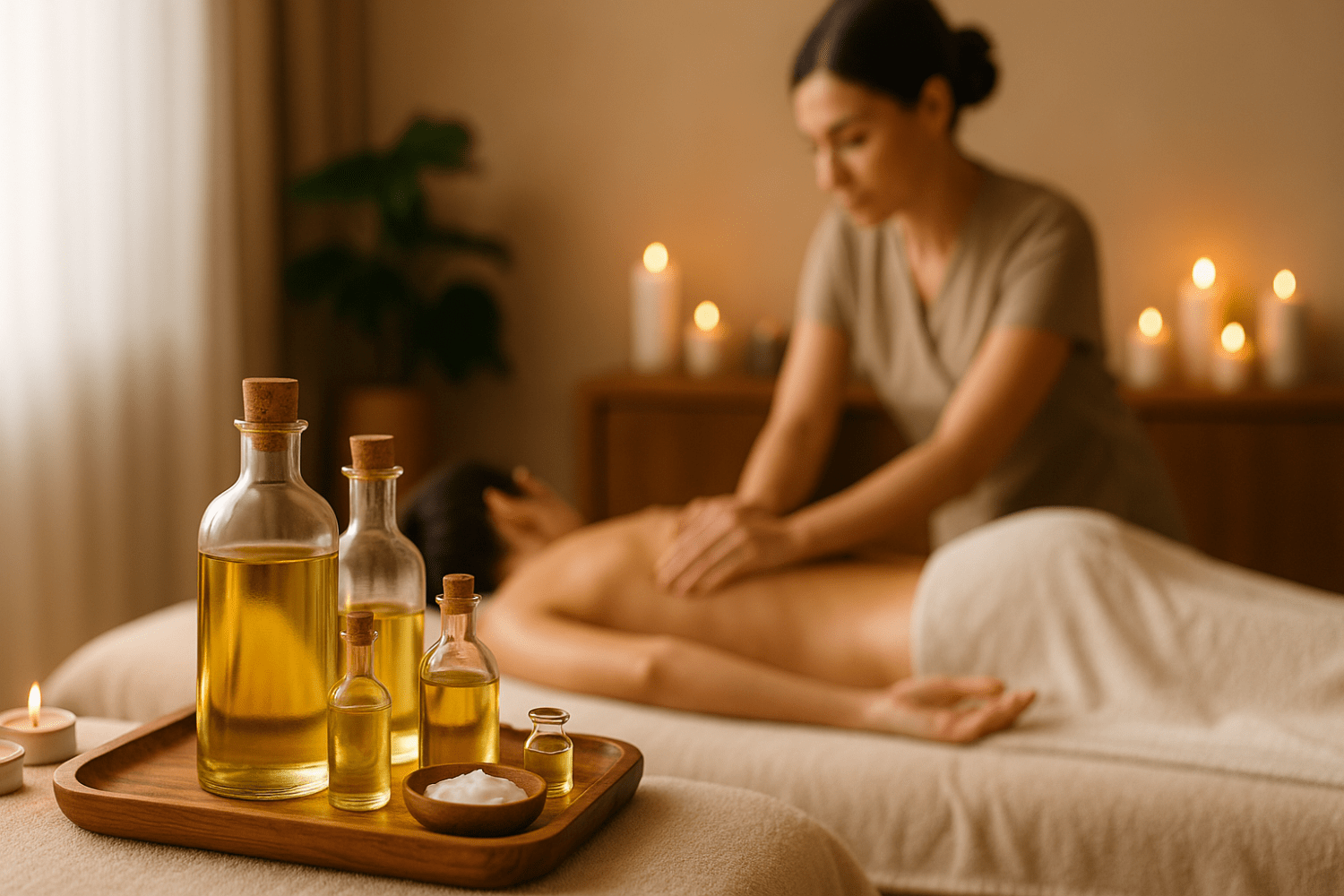
Massage therapy is one of the oldest healing practices in the world, with roots dating back thousands of years to ancient civilisations in China, Egypt, and India. Today, it remains a popular and effective method for reducing stress, relieving pain, improving circulation, and supporting overall well-being. A key component of a successful massage lies not only in the therapist’s touch but also in the oils and techniques used.
The Role of Oils in Massage
Massage oils are more than just a lubricant for the skin; they contribute significantly to the effectiveness of the treatment. The right oil enhances glide, minimises friction, nourishes the skin, and can offer therapeutic benefits depending on its composition.
1. Carrier Oils
Carrier oils form the base of most massage oil blends. They are derived from the fatty portion of plants and are typically unscented or mildly fragrant. Popular carrier oils include:
- Sweet Almond Oil: Lightweight, absorbs easily, and rich in Vitamin E.
- Jojoba Oil: Closely mimics the skin’s natural oils; excellent for sensitive skin.
- Coconut Oil: Has antimicrobial properties and a pleasant natural scent.
- Grapeseed Oil: Light texture, ideal for oily skin types.
2. Essential Oils
Essential oils are concentrated plant extracts used for their aromatic and healing properties. They are usually diluted into carrier oils before application. Some commonly used essential oils in massage therapy include:
- Lavender: Calming and relaxing, often used for stress relief.
- Peppermint: Cooling and invigorating, useful for sore muscles.
- Eucalyptus: Helps relieve congestion and inflammation.
- Rosemary: Stimulates circulation and relieves pain.
Massage Techniques: From Relaxation to Rehabilitation
There are various massage techniques, each tailored to address different needs and preferences. Below are some of the most well-known methods used by professional therapists.
1. Swedish Massage
Swedish massage is one of the most popular styles and is ideal for relaxation. It uses long, gliding strokes, kneading, and circular movements. The focus is on relieving muscle tension, improving blood flow, and promoting overall calm.
2. Deep Tissue Massage
As the name suggests, deep tissue massage targets the deeper layers of muscle and connective tissue. It’s particularly effective for chronic aches and pains, such as stiff necks, lower back tightness, and sore shoulders. This technique often incorporates slower, more forceful strokes.
3. Aromatherapy Massage
This technique combines soft massage strokes with the therapeutic effects of essential oils. The inhalation of aromatic compounds enhances mood, reduces anxiety, and improves energy levels. It’s a favourite among those seeking both emotional and physical balance.
4. Sports Massage
Designed for athletes, sports massage helps prevent injuries, prepares the body for athletic activity, and supports recovery. It often blends Swedish massage with stretching and trigger point therapy to address specific muscle groups.
5. Reflexology
Reflexology involves applying pressure to specific points on the feet, hands, or ears. These points are believed to correspond with different organs and systems in the body. Although reflexology is not a full-body massage, its benefits can be felt throughout the body.
Combining Oils and Techniques for Optimal Results
One of the best ways to elevate a massage experience is by combining the appropriate oil with a fitting technique. For example, a lavender-infused oil pairs beautifully with Swedish massage for a calming, stress-relieving session. Meanwhile, a blend of peppermint and eucalyptus oils can enhance the effects of a deep tissue massage, helping to soothe sore, inflamed muscles.
Some therapists customise oil blends based on the client’s skin type, desired outcomes, or even the time of day. Morning massages might use energising scents like citrus or rosemary, while evening sessions might feature grounding oils like sandalwood or ylang-ylang.
Safety Tips and Considerations
When using oils, it’s essential to consider allergies, skin sensitivity, and scent preferences. Always conduct a patch test when trying a new oil. Pregnant individuals, children, and those with medical conditions should consult a professional before using certain essential oils.
Additionally, massage should always be tailored to the individual’s needs. While pressure and style can be adjusted, open communication between therapist and client is key to a safe and effective session.
Conclusion
Massage therapy is as much an art as it is a science. By understanding the properties of different oils and the range of available techniques, therapists can craft deeply personalised and effective experiences. Whether you’re seeking relaxation, pain relief, or simply a moment of stillness, the right combination of touch and oil can support both the body and the mind on the path to healing.